The Systam Visit service stores all visitor data and retains it as specified. The General Data Protection Regulation (GDPR) requires that data is stored only for the necessary time, and the generally accepted time frame is 365 days.
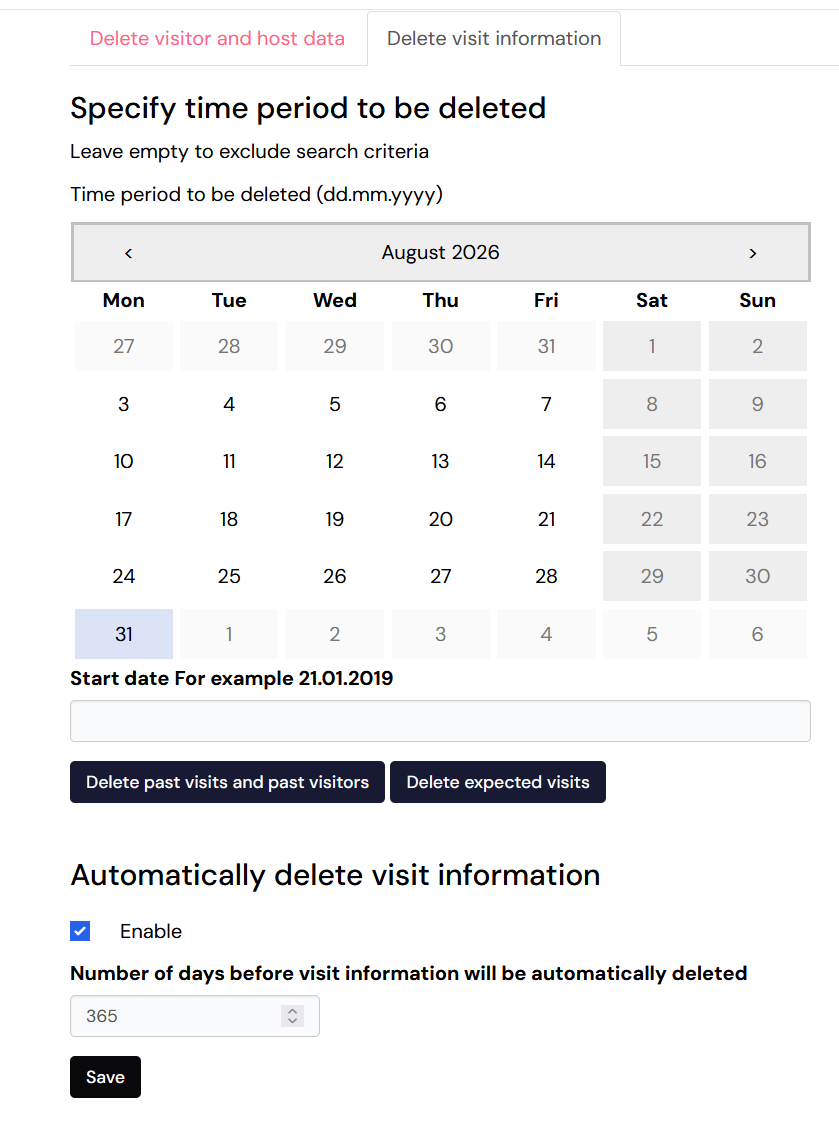
You can change the retention policy with the admin user credentials from the Systam Visit webservice (RespaManager).
In the left menu: Management > Delete data > Delete visit information > Automatically delete visit information
All visitor data is anonymized after the set timeframe (for example 365 days), which means that the statistics remain available even after deletion, but no personal information is found in the system.
How the retention period is counted
The retention period doesn't start from the visitor's first visit. It starts from the last time the visitor's data was handled.
The clock restarts every time the visitor's data changes, for example when:
- the visitor is invited
- the visitor signs in
- the visitor signs out (including automatic sign-out)
A visitor who comes in regularly keeps their data for as long as the visits continue. The data is deleted only after a full retention period has passed since the last change.
Examples (365-day retention period)
| Scenario | Last change to the data | Deleted around |
|---|---|---|
| Invited 1.1.2026, arrives 1.6.2026 | Sign-in and sign-out on 1.6.2026. If the visitor doesn't sign out, the automatic sign-out is the last change. | 1.6.2027 |
| No-show | In the night after the visit day, the system marks the visit as expired and deletes its QR and PIN codes. | One year after the visit day (give or take a day) |
| Visit cancelled or deleted on 15.3.2026 | The visit's data is deleted right away. The visitor's own record stays, and its clock starts from the deletion date. | 15.3.2027 (remaining data) |
Your data retention policy is saved and active.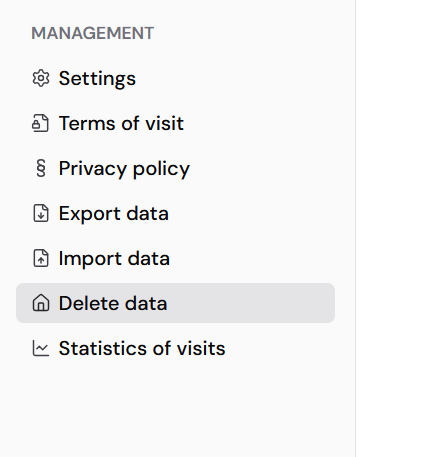
Was this article helpful?
That’s Great!
Thank you for your feedback
Sorry! We couldn't be helpful
Thank you for your feedback
Feedback sent
We appreciate your effort and will try to fix the article